On this page 7 sections
Walk into any hardware store and you will find two kinds of RJ45 plugs that look almost the same. One has a solid, closed front. The other has tiny holes at the tip, where the wires poke straight through. That small difference changes how you make a cable, which crimper you need and how often you get it right the first time.
This guide explains how pass-through and standard RJ45 connectors work, the pros and cons of each, the other plug types you will see, and how to choose the right one for your project.
What is a standard RJ45 connector?
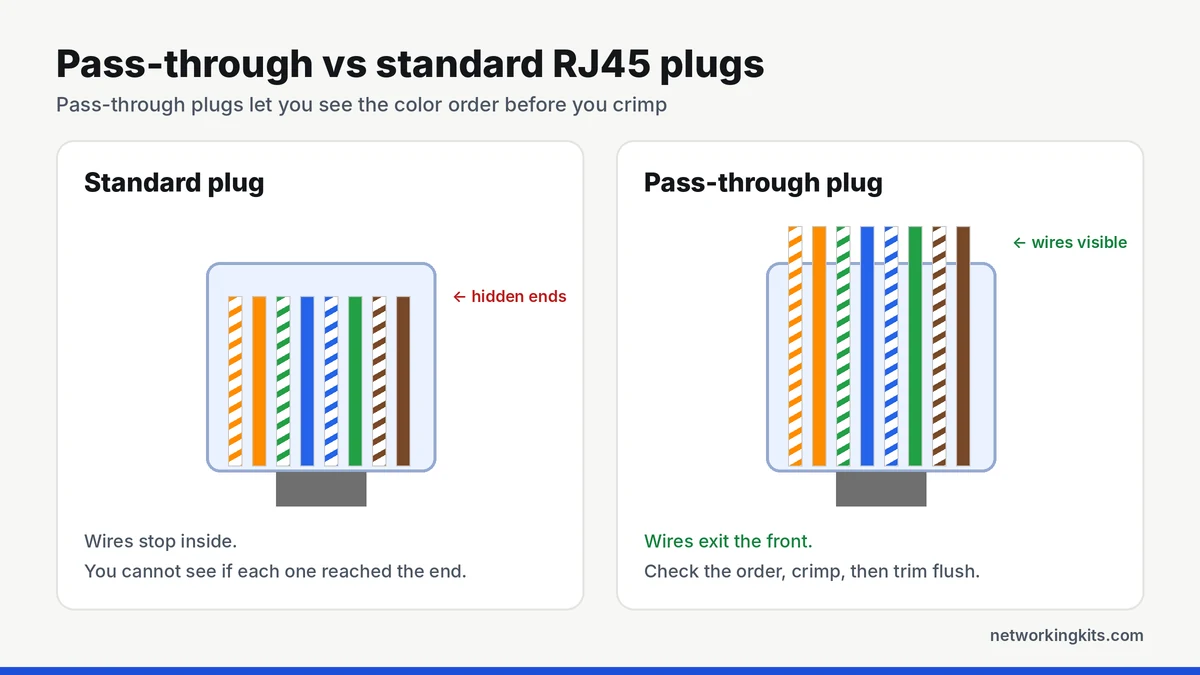
A standard RJ45 plug, sometimes called a modular plug, has a closed front. You arrange the eight wires in order, trim them to an exact length, usually about half an inch (13 mm), and push them into the plug until every copper end touches the inside of the front wall. Then the crimper presses eight gold contacts down through the insulation and into the wires.
Standard plugs have been around for decades, they are cheap, and almost every crimper works with them. The hard part is the trimming. If the wires are a little too long, the outer jacket will not reach the strain relief. If they are a little too short, a wire may not reach its contact. And once the wires are inside, it is hard to see whether the color order is still correct.
What is a pass-through RJ45 connector?
A pass-through connector, also called feed-thru or EZ, has an open front. Instead of trimming the wires first, you push them all the way through the plug, so they stick out of the front. You can check the color order through the clear plastic and at the tip, pull the plug snug against the jacket, and then crimp. A pass-through crimper trims the protruding wires flush with the plug face in the same squeeze.
Pros and cons at a glance
Pass-through connectors are better for: beginners, anyone making many cables, and Cat6, where thicker wires make exact trimming harder. You can see mistakes before you crimp, the jacket sits deeper in the plug for better strain relief, and failed terminations drop sharply.
Standard connectors are better for: very low cost, compatibility with any crimper, and installers who are already fast and accurate with them. They also leave no trimmed wire ends at the plug face, so there is nothing to snag.
The main drawback of pass-through plugs is the tool. You need a pass-through crimper with a built-in blade, and some crimpers only trim their own brand of plug. If the blade is dull or the squeeze is incomplete, a wire end can be left sticking out, which can short against a neighbor or scratch the jack it plugs into.
Other RJ45 plug types you will see
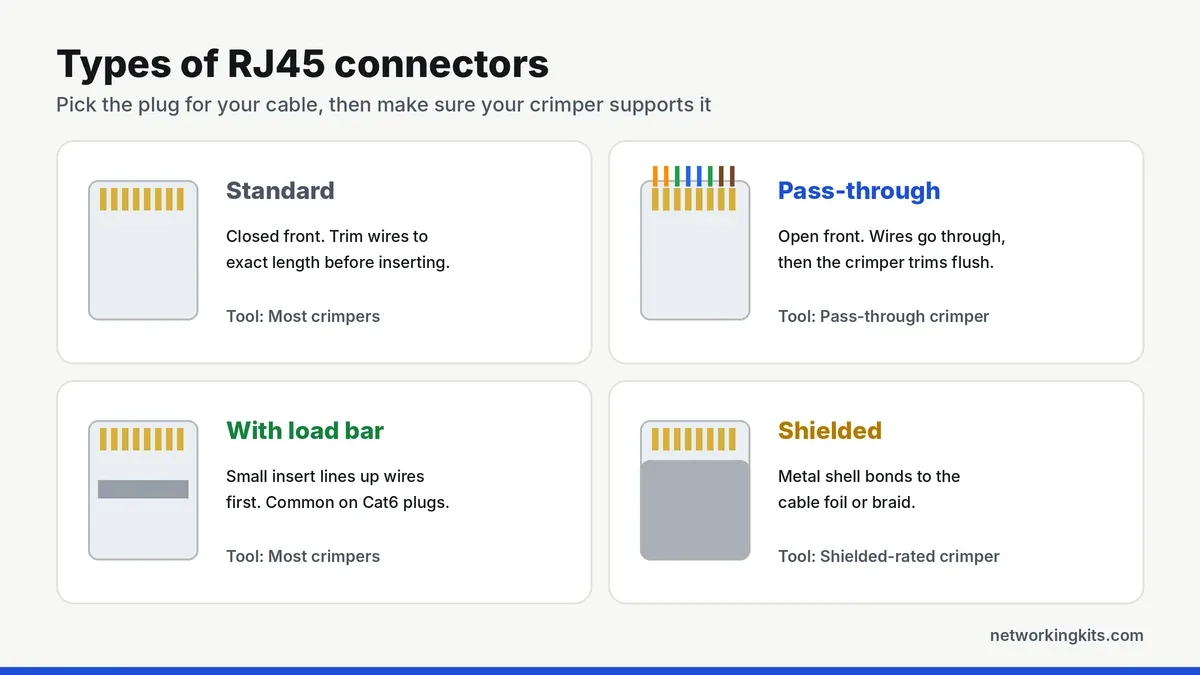
- Plugs with a load bar: a small plastic insert lines up the wires before they go into the plug. It is common on Cat6 plugs and makes standard termination much easier.
- Shielded plugs: a metal shell contacts the foil or braid of shielded cable, so the shield is continuous to the jack. Use them only with shielded cable.
- Solid vs stranded plugs: the contacts differ. Plugs for solid cable often use three-prong contacts that straddle the wire, while plugs for stranded cable pierce it. Many modern plugs handle both, but check the packaging.
- Cat5e vs Cat6 vs Cat6A plugs: higher categories have larger wire channels for thicker conductors. Always match the plug to your cable category.
Do you need a special crimper?
For standard plugs, almost any RJ45 crimper works. For pass-through plugs, you need a pass-through crimper, and compatibility varies. For example, Klein Tools pass-through crimpers are designed for Klein Pass-Thru plugs, while some other tools accept several brands.
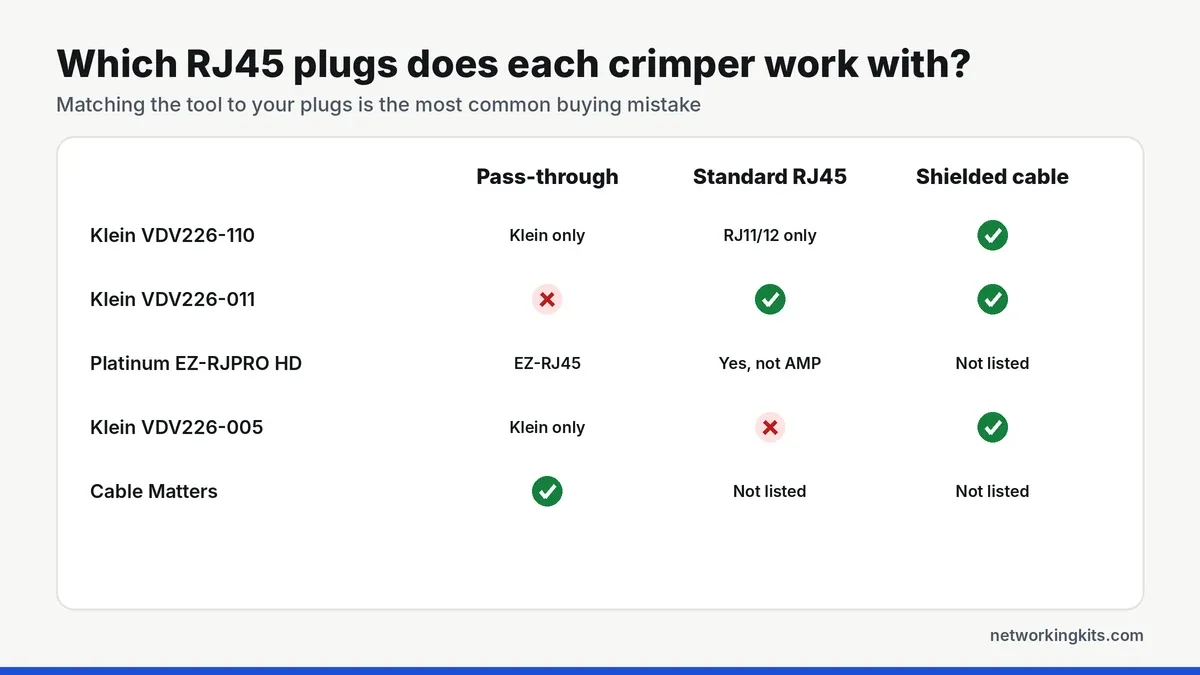
Our guide to the best RJ45 crimping tools compares the top crimpers and the plugs they support, and our networking tool kit roundup covers sets that include a crimper, plugs and a tester.
Buy plugs from the same brand as your pass-through crimper, at least at first. Once you know the tool trims cleanly, you can experiment with other brands, but mixed brands are the most common cause of uncut wires.
Which should you choose?
Quick verdict: pass-through plugs are easier and faster for most people, while standard plugs make sense if you only crimp a cable now and then.
If you are new to making cables, or you make more than a handful, choose pass-through connectors and a matching pass-through crimper. You will save time and plugs. If you only make the occasional cable and already own a standard crimper, standard plugs with a load bar are a good, cheap option.
Either way, use the same wiring standard on both ends, and test every cable before you install it. Our guide to Ethernet wiring standards and steps for making your own cables walk through the rest of the process.
Frequently Asked Questions
Are pass-through RJ45 connectors better?
For most people, yes. They let you check the wire order before crimping and make it easier to get a reliable termination, especially with Cat6. The trade-off is that you need a compatible pass-through crimper.
Can I crimp pass-through connectors with a regular crimper?
Not properly. A regular crimper presses the contacts but does not trim the wires that stick out of the front. You would have to cut them by hand, which rarely leaves them perfectly flush.
Do pass-through connectors affect speed?
No. When crimped and trimmed correctly, pass-through and standard plugs perform the same at gigabit and faster speeds. A poorly trimmed wire end can cause problems, though, so use a sharp, compatible crimper.
Can I use Cat6 connectors on Cat5e cable?
Often, but it is not ideal. Cat6 plugs have larger channels, so thinner Cat5e wires can sit loosely. Use connectors that match your cable category for the most reliable crimp.

We are network installers and home lab builders who have spent over a decade crimping, punching down and testing cable. Every guide is built from spec sheets, verified buyer feedback and real-world install experience.
How we research and score products →